buy a subscription to arcadja and discover all the advantages
Artists
Auctions
Auction houses
ENG
FRA
DEU
ESP
ITA
POR
RUS
Search Artist
Most requested artists
Artists with more lots
List of artists
Tracked artists
Artworks by monitored artists
Artist bookmarks
Calendar
Auction bookmarks
Upcoming auctions
Lot bookmarks
Geographic research
Auction houses list
Monitored auction houses
Auction house bookmarks
Subscriptions
Enrollment
Contacts
What do we do
Frequently asked question
Auction sponsorship
Terms and Conditions
Privacy policy
Information on cookies
It is necessary to accept cookies to receive all Arcadja services.
Information on cookies
I accept
Artist data
Artist code
5269
Name
CHALON Henry Bernard
Nationality
gb
Lots cataloged
112
Artist profile
Artworks for sale
Lots sorting reserved for subscribers
Arcadja is updated daily!
By subscribing you will have full access to 20 years of Auctions archived by Arcadja, with:
prices and information of any Artist without limits;
automatic alerts for Artists in Auction;
view of all forthcoming Auctions;
report on Artists of interest;
many additional functions exclusives.
With the available information:
you will be able to approximate the sale and purchase price;
searching, among the many, for the most suitable auction house to sell;
following the market for collections or investments;
doing in-depth studies and checks.
Subscriptions
CHALON Henry Bernard
Painter
United Kingdom, born in 1770, died in 1849
Artist's Artworks passed in Auctions
Up to now 2024-04-20, based on the attribution to the author set in the filter (Original, Attributed), Arcadja has cataloged 77 works for artist CHALON Henry Bernard. The first pass in the listed auction is 1998-05-05, while the last is 2024-01-25. The auction houses that have treated this artist in the last 6 years are 13 with a volume of 16 lots, while in the last 3 years the houses have been 6 with 8 lots. For more statistics and information visit the CHALON Henry Bernard ARTIST PROFILE, or change the attribution to the author in the FILTER.
Filter lots
Turn on alerts
full functionality reserved for registered users
Exclude lots that have no award
Exclude works without image
Attribution
All those available
Original, Attributed
Circle, Follower
Original
Attributed
Circle
Workshop
Follower
Successor
Manner
Arcadja remembers the preferences of logged in users
Lots per page 1
Lots per page 2
Lots per page 3
Lots per page 4
Lots per page 5
Lots per page 10
page 1
page 2
page 3
page 4
page 5
page 6
page 7
page 8
page 9
page 10
page 11
page 12
page 13
page 14
page 15
page 16
Totals 77, pages 1 to 16, current page 1
Press the pictures for details
CHALON Henry Bernard
1770 - 1849
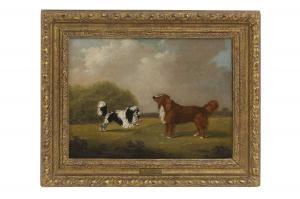
A Löwchen and a Toller
Lot number
16
auction catalog reserved for subscribers
Attribution
Original (Signed artwork)
Technique
Oil, Canvas
Estimates
Register and subscribe to see
Award
Register and subscribe to see
Artwork date
Register and subscribe to see
Dimensions (H x W)
Register and subscribe to see
Auction data
Register and subscribe to see
Short description
Henry Bernard Chalon (1770-1849) A Löwchen and a Toller signed and dated 'H. (...)
CHALON Henry Bernard
1770 - 1849
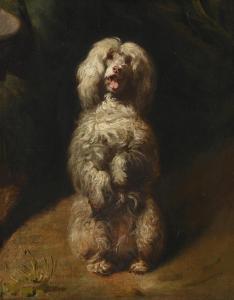
A BEGGING POODLE
Lot number
243
auction catalog reserved for subscribers
Attribution
Original
Technique
Oil, Canvas
Estimates
Register and subscribe to see
Award
Register and subscribe to see
Dimensions (H x W)
Register and subscribe to see
Auction data
Register and subscribe to see
Short description
HENRY BERNARD CHALON (BRITISH 1770/1-1849) A BEGGING POODLE Oil on canvas 33 x (...)
CHALON Henry Bernard
1770 - 1849
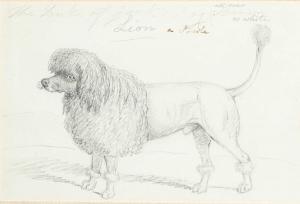
Portrait of Lion, the Duke of York's Poodle
Lot number
108
auction catalog reserved for subscribers
Attribution
Original
Technique
Pencil
Estimates
Register and subscribe to see
Award
Register and subscribe to see
Dimensions (H x W)
Register and subscribe to see
Auction data
Register and subscribe to see
Short description
Henry Bernard Chalon (1770–1849) Portrait of Lion, the Duke of York's Poodle (...)
CHALON Henry Bernard
1770 - 1849
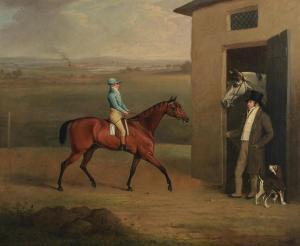
Prime Minister
Lot number
408
auction catalog reserved for subscribers
Attribution
Original (Signed artwork)
Technique
Oil, Canvas
Estimates
Register and subscribe to see
Award
Register and subscribe to see
Artwork date
Register and subscribe to see
Dimensions (H x W)
Register and subscribe to see
Auction data
Register and subscribe to see
Short description
Henry Bernard Chalon (London 1770-1849) 'Prime Minister' with jockey John (...)
CHALON Henry Bernard
1770 - 1849
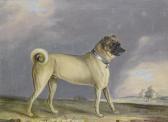
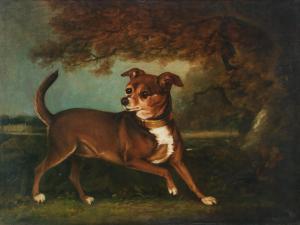
Portrait of a dog in a landscape
Lot number
451
auction catalog reserved for subscribers
Attribution
Original (Signed artwork)
Technique
Oil, Canvas
Estimates
Register and subscribe to see
Artwork date
Register and subscribe to see
Dimensions (H x W)
Register and subscribe to see
Auction data
Register and subscribe to see
Short description
Henry Bernard Chalon (British, 1770-1849) Portrait of a dog in a landscape (...)